
Walk into a good whisky bar and you’ll quickly discover there are two types of people: those who know exactly what they want, and those staring at the shelves hoping the bottle will explain itself.
If you’ve ever wondered about the single malt blended whiskey differences, you’re certainly not alone. Both can be complex, enjoyable and seriously good drinking, but they are made differently and can offer very different flavor experiences.
The important thing to remember is that single malt doesn’t automatically mean better, and blended whiskey isn’t the cheap stuff hiding at the back of the cupboard. In fact, some of the world’s most respected whiskies are blends.
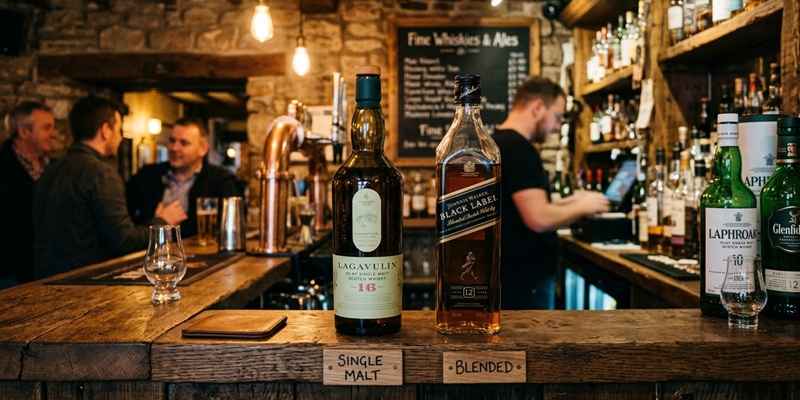
So, what’s the difference between single malt and blended whiskey? And which should you buy?
Let’s pour ourselves a dram and sort the whole thing out.
After that, you can read our ultimate guide to Whiskey.
What Is Single Malt Whiskey?
Single malt whiskey is made at one distillery using malted barley as the grain.
The word single is important here. It means the whiskey comes from a single distillery, not that it necessarily comes from a single barrel or a single batch.
A single malt can contain whiskey from numerous casks and different ages, provided everything comes from that one distillery.
This is where things get interesting.
Every distillery has its own production methods, still shapes, fermentation processes, maturation conditions and cask choices. These factors all contribute to the character of the final whiskey.
Think of a distillery as having its own personality. Some are smoky and intense, others are fruity and elegant, while some seem determined to make your taste buds start writing poetry.
Is single malt only made in Scotland?
No.
Scotland is famous for single malt Scotch whisky, but single malt whiskey is produced in other countries too, including Ireland, Japan, the United States and Australia.
However, the rules surrounding the term “single malt” can vary between countries, so it’s worth paying attention to the specific regulations applying to the whiskey you’re buying.
For Scotch whisky, single malt must be made at a single Scottish distillery using malted barley and distilled in copper pot stills.
What Is Blended Whiskey?
Blended whiskey is made by combining whiskies from more than one distillery, or by combining different types of whiskey according to the rules applying to the particular style.
Blending isn’t simply a case of tipping several bottles into a bathtub and hoping for the best.
Professional blenders carefully select whiskies for their flavor, aroma, texture and character before combining them to create a particular profile.
A blend might contain lighter, sweeter whiskey alongside richer or more robust whiskey. The aim is usually to produce a balanced and consistent final product.
This is one of the key ways single malt differs from blended whiskey.
Single malt generally showcases the character of one distillery, while blending gives the producer considerably more ingredients to work with.
Single Malt vs Blended Whiskey: What’s The Difference?
The easiest way to understand the difference is to think about where the whiskey comes from and how the final flavor is constructed.
| Feature | Single Malt Whiskey | Blended Whiskey |
| Distilleries | One | Usually multiple |
| Main grain for Scotch single malt | Malted barley | Depends on blend |
| Flavour | Often distinctive to the distillery | Designed for balance and consistency |
| Complexity | Can be highly complex | Can also be highly complex |
| Consistency | Often aims for a house style | Blending can help maintain consistency |
| Price | Can range from affordable to extremely expensive | Ranges from inexpensive to premium |
| Beginner friendly | Yes | Yes |
Neither category automatically wins.
That’s probably disappointing if you came here hoping for a definitive winner. But whiskey doesn’t work like a football ladder.
Why Does Single Malt Whiskey Taste Different?
The character of single malt whiskey is heavily influenced by the distillery where it is produced.
The barley, water, fermentation, distillation, maturation and cask selection can all contribute to the final spirit.
Some single malts may have flavors of vanilla, honey, apple, pear or dried fruit. Others can be spicy, nutty, rich, maritime or heavily smoky.
Peat is another major factor, particularly with some Scottish whiskies.
Peated whisky can have flavors ranging from gentle earthiness to powerful smoke, ash and medicinal notes.
And this is where things get fun.
Two single malts can both technically belong to the same category while tasting dramatically different.
It’s a little like saying two restaurants both serve steak. Technically correct. Not especially helpful if one serves a perfectly cooked rib-eye and the other serves something resembling a hockey puck.
Why Is Blended Whiskey So Popular?
Blended whiskey has one major advantage: the blender has more whiskies to work with.
Rather than relying solely on the character of one distillery, a blender can combine different whiskies to create a specific flavor profile.
This can produce a whiskey that is smooth, approachable and consistent from bottle to bottle.
That consistency is one reason blends have historically been enormously popular.
If you enjoy a particular blended whiskey, you generally want the next bottle to taste recognizably like the previous one.
That’s where the blender earns their money.
A good blend isn’t about hiding inferior whiskey. It’s about combining different components so the final product works as a whole.
Can Blended Whiskey Taste As Good As Single Malt?
Absolutely.
Can blended whiskey taste as good as single malt? Yes — although “as good” is ultimately a matter of personal taste.
Some drinkers prefer the distinctive character of single malt. Others prefer the balance and accessibility of a well-made blend.
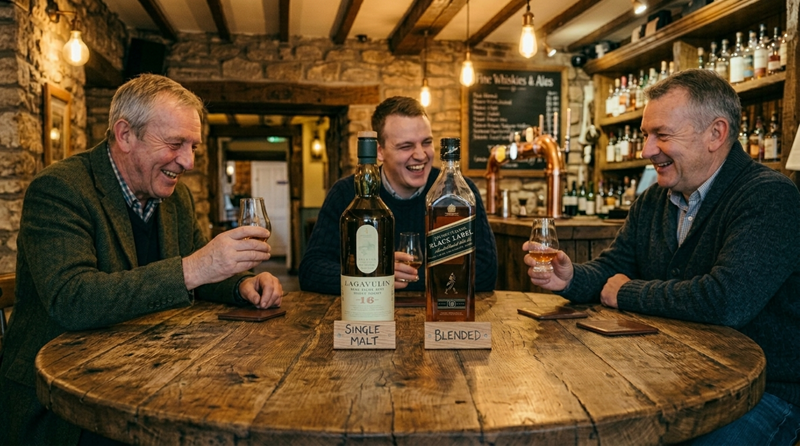
There are also premium blended whiskies that command serious prices and have developed loyal followings among experienced whiskey drinkers.
The idea that single malt is automatically superior is more marketing mythology than drinking law.
Your glass doesn’t know what category is printed on the label.
Is Single Malt Whiskey Better For Beginners?
Not necessarily.
In fact, single malt whiskey for beginners can be an excellent introduction to whiskey, particularly if you choose a relatively approachable bottle.
A lighter, fruitier single malt can allow a new drinker to explore the flavors of whisky without being overwhelmed by intense smoke or heavy oak.
However, a smooth blended whiskey can be equally suitable.
What Is The Best Blended Whiskey For Beginners?
There isn’t one universal answer to the best blended whiskey for beginners.
Look for something described as smooth, balanced, approachable or lightly flavored rather than immediately jumping into something extremely smoky or high in alcohol.
A good beginner’s whiskey should encourage you to take another sip rather than make you wonder whether you’ve accidentally swallowed a campfire.
And don’t worry about drinking it “the right way.”
Try it neat first, then add a few drops of water or a little ice if that’s how you enjoy it.
You’re drinking whiskey, not sitting an exam.
What Is The Best Single Malt Or Blended Whiskey?
The question of the best single malt or blended whiskey is really two questions.
First, what style do you enjoy?
Second, how much are you prepared to spend?
If you enjoy distinctive distillery character, exploring single malts can be fascinating. You can compare different regions, maturation styles, ages and levels of peat.
If you prefer smoothness, balance and consistency, a quality blend may be more appealing.
Price also complicates things.
There are affordable single malts that offer excellent value and expensive blends that are produced as luxury products. The reverse is also true.
So don’t choose a whiskey simply because the words “single malt” appear on the label.
Choose one that suits your palate.
As an example of price difference, Glen Scotia and Macallan are two of the well known brands that can offer both. The first two bottles are Glen Scotia, the following two are Macallan.
Entry levels begin in the low hundreds but the expensive single malt whiskeys can be in the hundreds of thousands.
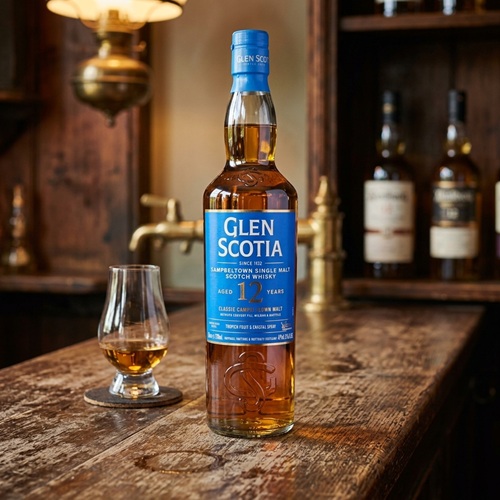
Glen Scotia, Single Malt, Entry Level
Low Range Pricing
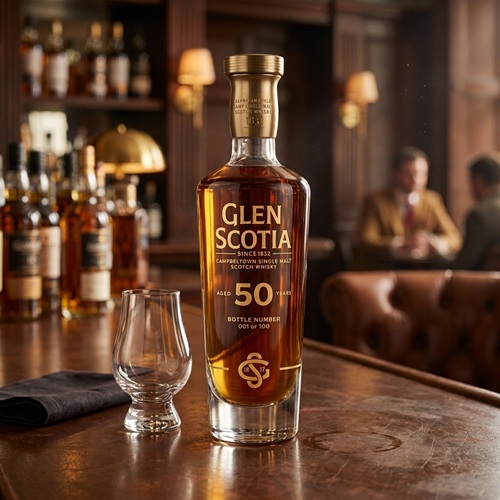
Glen Scotia, Single Malt, Expensive
High Range Pricing
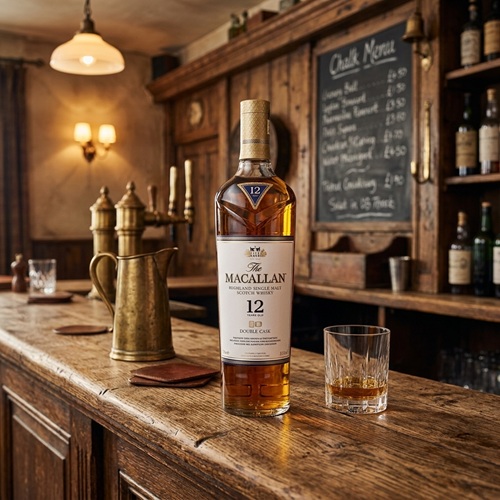
Macallan, Single Malt, Entry Level
Low Range Pricing
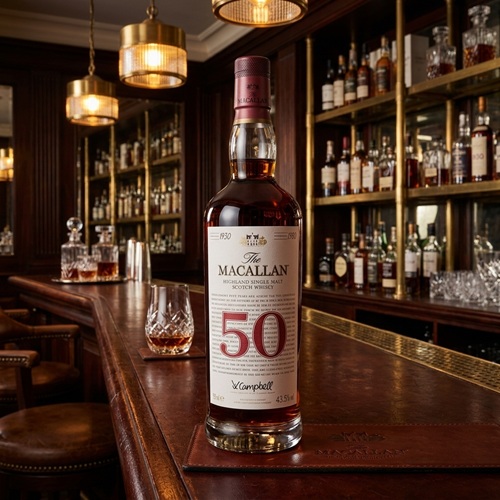
Macallan, Single Malt, Expensive
High Range Pricing
Do I Need A Different Glass For Single Malt Whiskey?
One of the easiest questions to answer is: Do I need a different glass for single malt whiskey?
No.
You don’t need a special glass simply because your whiskey happens to be a single malt.
However, the shape of a glass can influence how you experience the aroma.
A tulip-shaped whisky glass can concentrate aromas toward your nose, making it easier to appreciate subtle notes.
A traditional tumbler or rocks glass is perfectly suitable too, particularly if you’re enjoying whiskey over ice (or whiskey stones).
And if you’re using a beautiful whisky glass that makes you feel like you’ve just been appointed chairman of the whisky appreciation society, that’s fine as well.
The best glass is ultimately one you’ll actually enjoy using.
When Should I Serve Single Malt Instead Of Blended Whiskey?
When should I serve single malt instead of blended whiskey?
There isn’t a hard rule.
Single malt can be a great choice when you want to sit down and explore the whiskey itself. It can work particularly well as a sipping drink after dinner or when you’re introducing someone to a particular distillery or style.
Blended whiskey can be excellent when you’re entertaining because its approachable character can suit a wider range of preferences.
It can also work beautifully in cocktails, depending on the style of blend you’re using.
If you’re hosting a group, having both available isn’t a bad strategy.
One bottle for the whiskey enthusiast.
One for everyone else.
And perhaps one hidden behind the books in case the conversation turns into an argument about whether adding ice is sacrilege.
Can You Mix Single Malt Whiskey?
You can.
The question is whether you want to.
Some single malts are perfectly enjoyable in cocktails, while others are better appreciated neat or with a small amount of water.
A heavily peated single malt, for example, can completely dominate a cocktail.
That’s not necessarily a bad thing. It just means you need to know what you’re working with.
Blended whiskey is often a popular choice for mixed drinks because its balanced profile can work well with other ingredients.
But there are no whiskey police.
If you want to put an expensive single malt into a cocktail, that’s your business.
Just don’t expect the bartender to recover emotionally.
Does Age Make Single Malt Better Than Blended Whiskey?
Not automatically.
Age tells you how long the whiskey has matured in wood, not whether you will personally enjoy it.
Older whiskey can develop additional layers of flavor and complexity, but younger whiskies can also be excellent.
The same principle applies when comparing single malt and blended whiskey.
A well-made younger blend can be far more enjoyable to you than an older single malt.
Age, price and category are useful clues, but your palate gets the final vote.
Which Should You Choose?
If you’re trying to decide between single malt and blended whiskey, start with the flavor profile you enjoy.
Choose single malt if you:
- Want to explore individual distillery character.
- Enjoy discovering different flavor profiles.
- Like sipping whiskey slowly.
- Want to compare regions, casks or levels of peat.
- Enjoy the story and production methods behind a particular distillery.
Choose blended whiskey if you:
- Prefer smooth and balanced flavors.
- Want a reliable bottle for entertaining.
- Enjoy whiskey in cocktails or mixed drinks.
- Are new to whiskey and want an approachable starting point.
- Don’t want to spend a fortune exploring the category.
And remember, you don’t have to pick a side.
There’s nothing wrong with having a bottle of single malt sitting next to a good blend.
Single Malt vs Blended Whiskey: The Final Pour
The biggest single malt blended whiskey differences come down to production, provenance and flavor construction.
Single malt generally showcases the character of one distillery, while blended whiskey combines whiskies to create a particular flavor profile.
But neither is automatically better.
A great single malt can be complex, distinctive and fascinating. A great blend can be smooth, balanced and every bit as enjoyable.
The best approach is to forget the whisky snobbery, pour yourself a glass and try both.
You might discover you prefer a smoky single malt.
You might prefer a smooth blend.
Or you might discover that your favorite whiskey is whichever bottle happens to be within arm’s reach when someone says, “Fancy a drink?”
Honestly, that’s not a bad way to conduct research.
Want to Learn More About Spirits?
Check out these artcicles.