Smart lighting for a man cave works best as three jobs: a soft wash on the walls, a low glow behind the TV, and a focused beam on the bar shelf. Light strips handle the first two, a spotlight or shelf light handles the third, and one voice assistant runs all of it.
What kind of smart lighting does a man cave actually need?
A man cave needs three kinds of light, each doing one job: wash the walls, protect your eyes at the screen, and put the liquor shelf in the spotlight. Most rooms get this wrong by buying one type of fixture and using it everywhere, which is how you end up with a basement that looks like a nightclub or a dentist’s office.
Walls want broad, even, low-level light, so the room reads as a space and not a box. The screen wants a soft glow behind it so a bright picture does not sit against a dark wall. The bar wants direction, because bottles look like a collection only when light lands on them and leaves the surroundings a little dimmer.
The “smart” part is what ties the three together. Each job gets its own brightness and color, and you change all of them with one sentence instead of a lap around the room flipping switches.
Which smart bulbs, strips, and panels fit which part of the room?
Bulbs suit lamps and existing sockets, strips suit edges and hidden spots, and panels suit a wall you want to be a feature. Matching the fixture to the job saves money and avoids returns.
| Job | Best fixture | Where it goes | Watch out for |
|---|---|---|---|
| Wash the walls | Smart bulbs in lamps, or a strip along the ceiling edge | Corner lamps, crown molding, top of a bookcase | Visible dots of light if the strip faces the room directly |
| Protect the screen | Strip on the back of the TV | Back edge of the TV or the top of the wall mount | Colors that clash with the picture |
| Spotlight the bar | Strip or puck light under or inside the shelf, plus a small spot or bulb overhead | Underside of each shelf, front edge hidden | Glare off glass bottles |
| Make a statement | Wall panels | One feature wall, away from the screen | Using them everywhere, which turns the room into an arcade |
Panels are the fun purchase and the easiest to overdo. One feature wall looks intentional, and three looks like you lost an argument with a gaming store.
How do you light the bar so the bottles look like a collection?
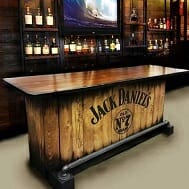
Light the bar from the sides and above or below the shelf, and keep the light source hidden so the bottles get the credit. A bright, exposed strip sitting at eye level makes the shelf look like a vending machine.
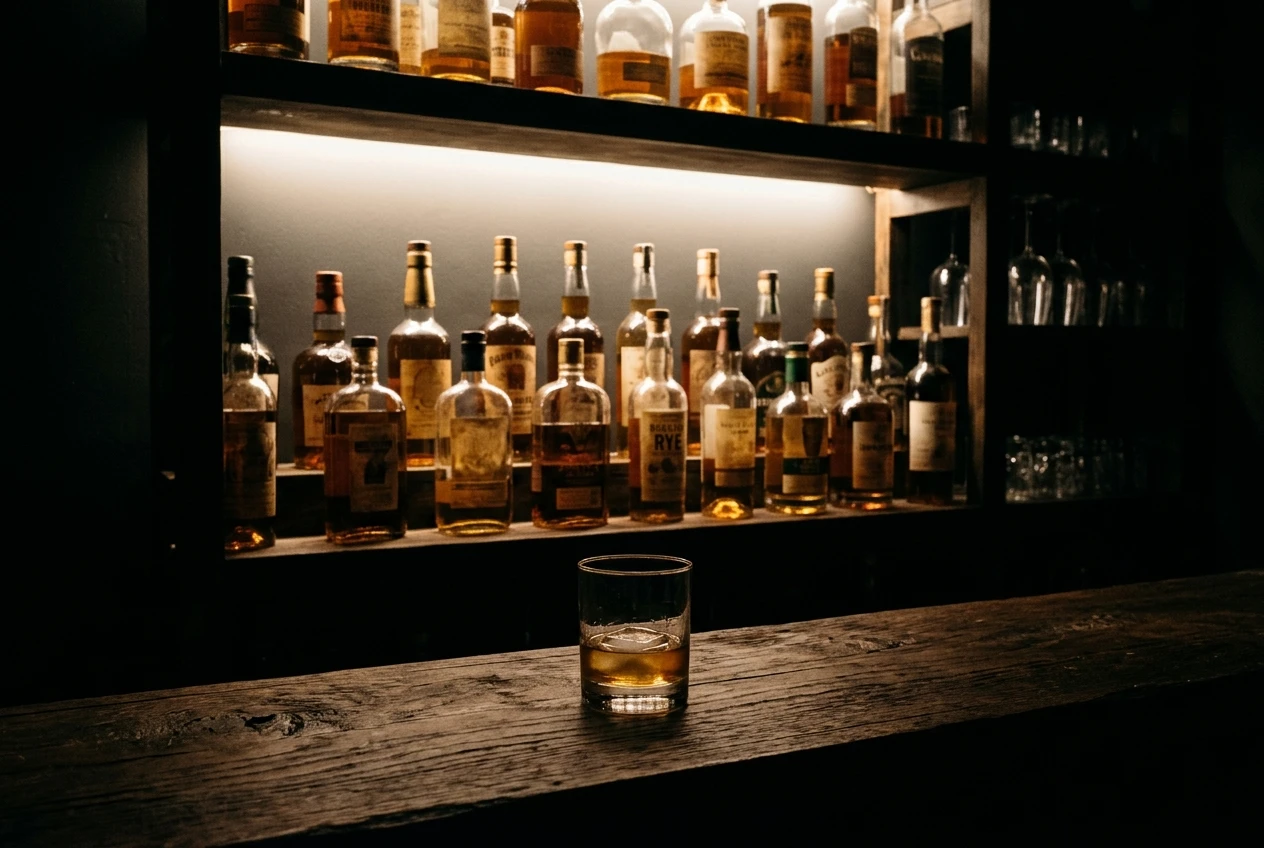
Here is what works on a typical bar shelf:
- Hide the strip. Mount it on the underside of the shelf above, tucked behind the front lip, so you see the glow and never the light itself.
- Choose warm white for the shelf. Amber and brown liquor looks richer in warm light. Cool white turns bourbon the color of weak tea.
- Look for good color rendering. Product listings sometimes mention a CRI rating. A higher one means colors look truer, which matters when the product is a deep copper rye.
- Dim it. A shelf at full brightness looks like an inventory check. A shelf at a moderate level looks like a place with taste.
- Add one small spot on the bar top. It gives you light to pour by without flooding the whole room.
Glass catches light, so the glassware on display matters as much as the bottles. If your collection of drinking vessels is mostly coffee mugs, the home bar glassware cheat sheet fixes that before the shelf lights make it obvious.
Keep the bottles out of direct window sunlight as well. Sun fades labels over time, and no strip light will repair that.
Can you light the TV wall without wrecking the movie?
Yes, with a dim, steady glow behind the TV and nothing flashy anywhere in your line of sight. The goal is to reduce the contrast between a bright screen and a dark wall, which makes long viewing easier on your eyes.
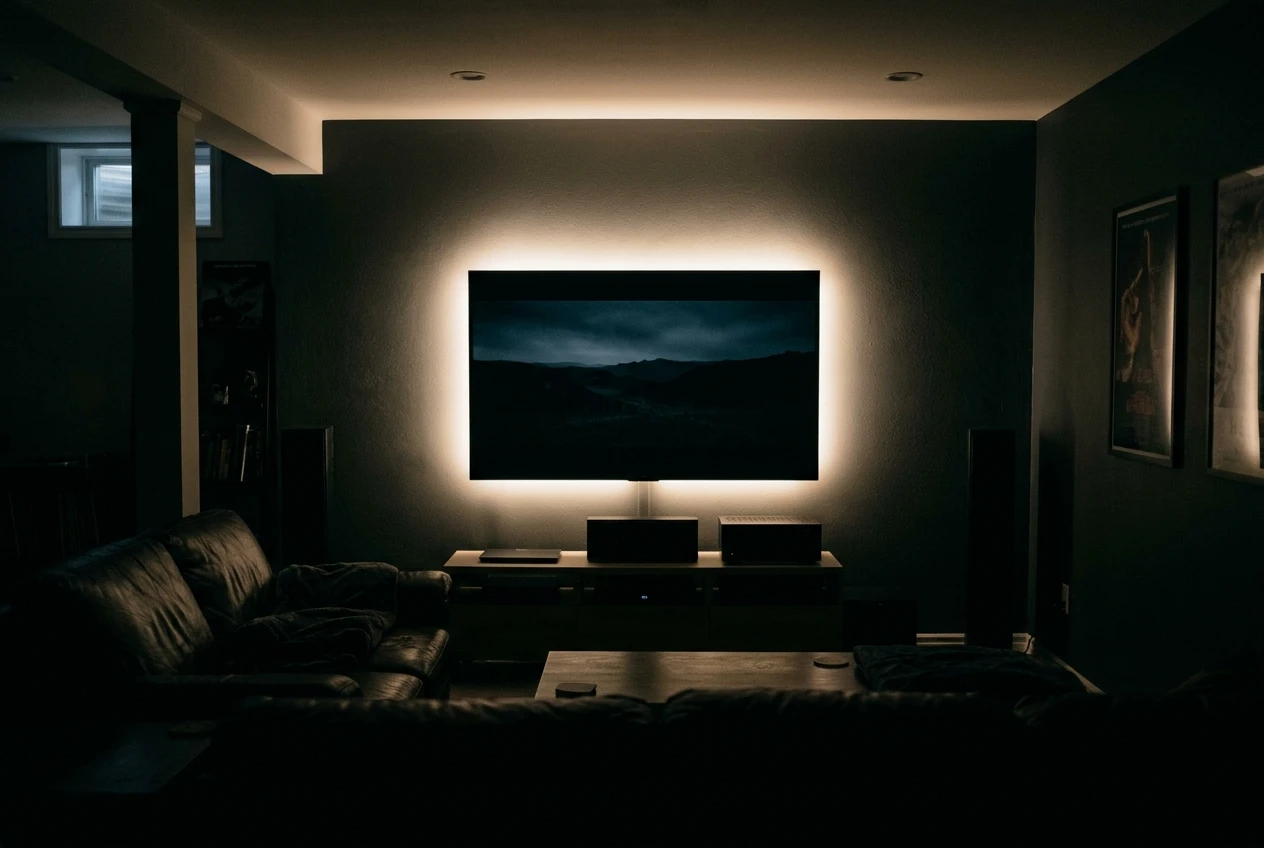
Put a strip on the back edge of the TV, facing the wall, so the light bounces off the surface behind it. Pick a neutral white or a soft warm tone and keep it low. A rainbow effect that pulses with the picture is entertaining for about four minutes, then you will want it gone.
Avoid any light that reflects in the screen. Lamps beside or in front of the TV bounce glare straight back at you, and a glossy panel shows every one of them. Move the lamp, aim it at a wall, or turn it off for movie night.
Seating matters here too. If you are still choosing where everyone sits, the man cave furniture buying order helps you place the room before you place the light.
Which voice assistant and app should run the whole thing?
Use whichever voice assistant already lives in your house, because the best one is the one you will actually talk to. Amazon Alexa, Google Assistant, and Apple Home with Siri all control smart lights, and any of them can run the scenes described below.
Before you buy anything, check two things on the box or the product page:
- Which assistants it supports. A strip that works with Alexa but not your Apple setup will make you feel strangely betrayed by a roll of LEDs.
- Whether it supports Matter. This is a standard designed to let devices from different brands work together. It makes mixing brands less of a gamble, though it is worth confirming on the specific product.
Brand apps usually offer the best color controls and effects. The assistant’s own app is better for grouping lights and building scenes. A good setup uses the brand app once to connect the light, then lives in the assistant app from then on.
Keep everything on one assistant. Two assistants arguing over the same light is a very specific kind of household comedy, and you will be the only audience.
How do you build scenes for game night, movie night, and a quiet whiskey?
A scene is a saved combination of brightness and color across your lights, triggered by a phrase you choose. Build three, name them in plain words, and the room changes with one sentence.
Game night
Game night needs enough light to see cards, snacks, and the person who is cheating. Set the wall wash to a bright, neutral white at a high level, turn the bar shelf on at medium, and leave the TV glow on low. Name the scene something you can say with a mouth full of chips, such as “game night.”
Movie night
Dim the wall wash to a low level, set the TV glow to a soft neutral, and drop the bar shelf to a faint warm glow. Turn the bar spot off completely, since a bright dot in the corner of your vision will bother you through every dark scene. This is the one scene where the room should nearly vanish.
A quiet pour
Warm everything. Set the wall wash low and amber, the TV glow off, and the bar shelf at its best brightness, because this is the moment the collection earns its place. Keep the bar spot at a low level so you can see what you are pouring and how much.

A few practical notes on scenes:
- Name them with short, distinct phrases so the assistant does not mishear them.
- Test each one at the time of day you will use it. A scene that looks right at noon may look wrong at 9 p.m.
- Add a simple “lights off” that kills everything, for the end of the night when standing up feels like a lot.
What do you buy first, and what can wait until the next paycheck?
Buy the bar shelf lighting first, because it changes how the room looks the most for the least money. Everything else can follow in an order that fits your budget.
- Bar shelf strip or puck lights. The biggest visible upgrade, and the part guests will comment on.
- A smart plug or two, plus a couple of smart bulbs. These turn existing lamps into scene-ready lights without any wiring.
- A strip behind the TV. Cheap, quick to install, and easier on your eyes during long sessions.
- A ceiling-edge strip for the wall wash. This one takes more planning to hide the strip, so it can wait for a free weekend.
- Wall panels. Nice to have, and the first thing to cut if the budget is thin.
Prices vary by brand and size, so compare current listings before you commit. Smart plugs are a quiet bargain, because they let a lamp you already own join the system for very little effort.
What goes wrong with smart lighting, and how do you fix it?
Most smart lighting problems come from weak Wi-Fi, a wall switch that cuts power, or a strip stuck to a surface it does not like. All three have simple fixes.
- The light drops offline. Many smart lights connect only to the 2.4 GHz Wi-Fi band, and basements often have weak signal. Move the router, add a mesh node, or check that the light and the phone are on the same network when setting up.
- The assistant cannot find the light. The wall switch is probably off. A smart bulb with no power cannot hear you, so leave the switch on and use your voice or the app instead.
- The strip peels off. Adhesive struggles on dusty, textured, or painted surfaces. Wipe the surface clean and dry first, and use small clips or mounting channels where the strip carries weight.
- The colors do not match. Lights from different brands render white a little differently. Stick to one brand per zone, or adjust each light by eye until the room looks consistent.
- The scene does half its job. One light is probably missing from the group. Open the assistant app, check every fixture is added to the scene, and run it again.
- Glare on the screen or the bottles. Move the source or change the angle. Light that reflects in glass is almost always pointed in the wrong direction.
If a fix does not work, restart the light by switching it off and on at the wall, then reconnect it in the app. It is the least glamorous advice in the room, and it works more often than anyone admits.