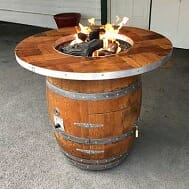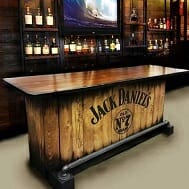
The man cave furniture you actually need, in buying order, is seating first, then a surface for drinks, bar stools if you have a bar, storage, and finishing pieces like lighting and a rug. Buy the seat you will sit in most before anything else, because every other piece is arranged around it.
What furniture does every man cave actually need?
Every man cave needs somewhere comfortable to sit, somewhere to put a drink, and somewhere to store the things that would otherwise end up on the floor. Everything beyond that is a bonus, and most of the bonuses can wait until you know how you use the room.
Here is the buying order this guide follows:
- Main seating: a recliner, sofa or sectional.
- Surfaces: a coffee table, side tables or a bar cart.
- Bar seating: stools, and the bar or cabinet they sit at.
- Storage: closed cabinets, shelving and a media console.
- Finishing pieces: rug, lighting, wall décor, a mini fridge.
The order matters because a mistake early costs more than one late. A bad sofa makes the whole room feel wrong, while a bad lamp costs the price of a lamp.
Each piece below is judged on three things:
- Comfort: can you sit in it for a three-hour game without shifting every ten minutes?
- Durability: will it survive spilled drinks, snack crumbs and friends who put their boots on everything?
- Look: does it have the heavy, solid, slightly moody character that makes a man cave feel like one?
If you have a bar corner, there is also a fourth question: how does the piece work with the bar? Each section answers it.
Which seating should you buy first: recliner, sofa or sectional?
Buy the seating you will use most, and for most rooms that means a sofa or sectional if you host, or a recliner if the room is mainly for you. This is the biggest purchase in the room, so it gets the most thought.
| Feature | Recliner | Sofa | Sectional |
|---|---|---|---|
| Comfort | Highest for one person, with a footrest and adjustable angle | Good for lounging and a short nap | Best for stretching out and for large groups |
| Space needed | Needs clearance behind it if it reclines back | Moderate | The most floor space of the three |
| Durability concerns | Moving parts (the mechanism) wear before the frame does | Cushion fill and fabric | Same as a sofa, plus the joins between sections |
| Bar setup | Easy to angle toward both screen and bar | The back can mark off the bar area | Can wrap around the room and set the bar apart |
| Best for | A solo room or a pair of recliners | Most rooms, most budgets | Larger rooms with regular guests |
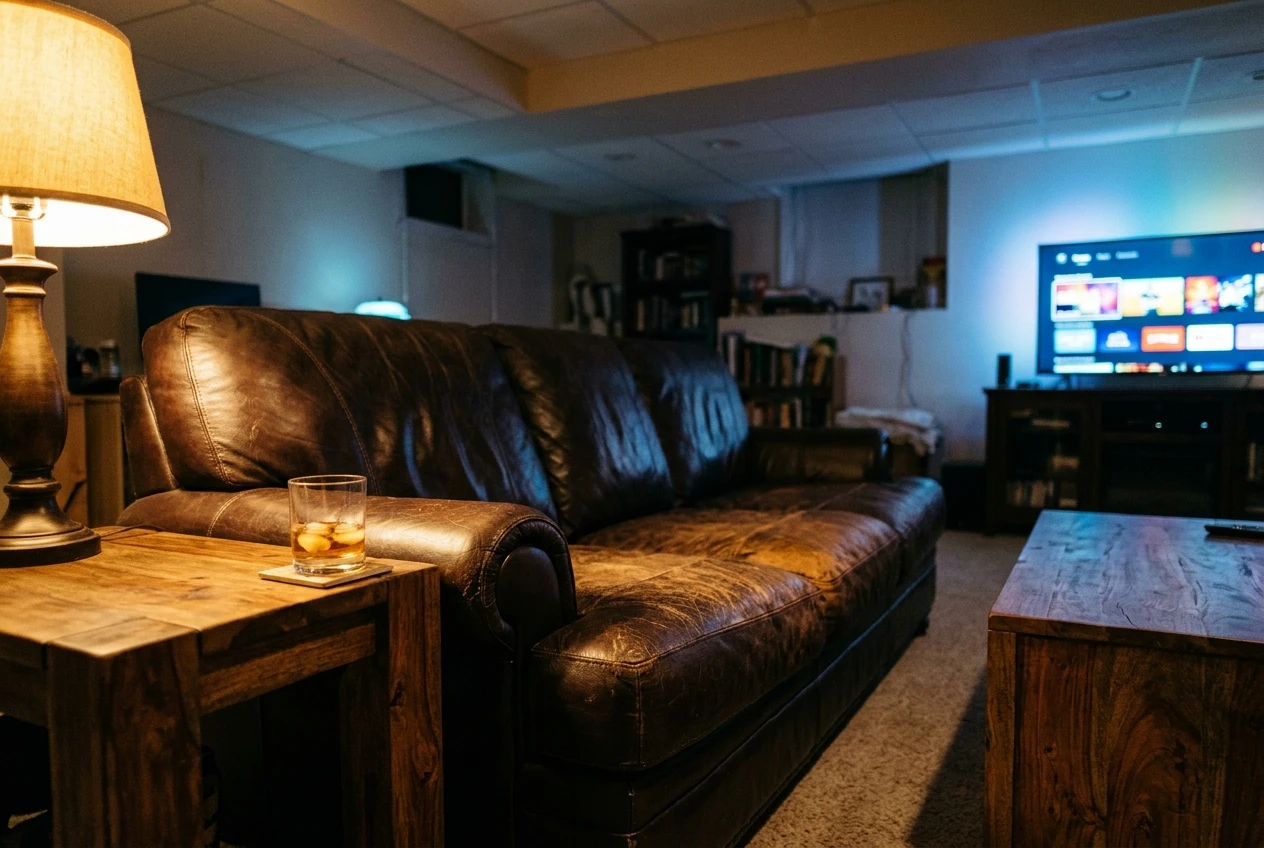
Recliner
A recliner is the classic choice because it is the most comfortable single seat you can buy. The trade-off is the mechanism. Check how the footrest and back operate in the store if you can, and read the warranty terms on the frame and the moving parts separately. Two recliners side by side give you a movie-night setup, though a row of them seats fewer people than one sofa.
Sofa
A sofa seats more people in less space than a pair of recliners and suits a room that doubles as a hangout. Look for a deep seat and a firm cushion. Shallow seats suit sitting upright, while a man cave needs a seat you can sink into without needing help to get out.
Sectional
A sectional works when the room is big enough to hold it with space left to walk around. It also divides the room, with the long arm of the L forming a natural edge between the seating area and the bar. In a small room, though, it takes over, and you end up walking along its edge like a hallway.
If you want the strongest masculine look and good durability, leather or a dense, textured fabric both work. Leather wipes clean after a spill. Fabric is softer and cheaper, but cleaning matters more here than in a living room, so check whether the cover is removable or treated for stains.
Do you need a coffee table, side tables or a bar cart?
You need at least one place within arm’s reach of every seat to set a drink, and which piece provides it depends on the room. A coffee table, side tables and a bar cart do different jobs, so pick by what is missing.
- Coffee table: best when seats face each other or sit around a central spot. Leave roughly 14 to 18 inches between the sofa edge and the table, close enough to reach and far enough to walk through. A lower shelf is useful for remotes and controllers. A table with rounded corners saves shins in a dim room.
- Side tables: better when the seating faces a screen in a line. They sit at the arm of a recliner or sofa and hold a drink and a phone without crowding the floor. Pick ones with a top large enough for a glass and a coaster.
- Bar cart: a bar cart is a bar you can move. It makes sense when you have no space for a fixed bar, or when you are just starting your collection and have a handful of bottles. It holds bottles, glasses and tools on its shelves and rolls to wherever the company is sitting.
A cart has limits. It holds a small collection, and a full set of bottles quickly outgrows it. If you already own more liquor than a cart’s shelves allow, skip to the bar section below, and see our beginner’s guide to cocktail making tools for what to put on that cart.
For durability, avoid glass tops and soft untreated wood near drinks. Solid wood with a sealed finish, metal, or stone-effect surfaces handle rings and spills better. Coasters help with any material, though people tend to ignore them, so choose a surface that forgives.
What are the best bar stools and bar furniture for a man cave?
The best bar stools are the ones that match your bar’s height, have a back or footrest for long sitting, and use a frame that survives being dragged across the floor. Measure the bar top first and buy stools second.
The general rule is to leave about 10 to 12 inches between the seat and the underside of the bar top. A standard counter at around 36 inches pairs with stools of roughly 24 to 26 inches in seat height. A taller bar at around 42 inches pairs with seats of roughly 28 to 30 inches. Buying stools first and the bar second is how people end up eating dinner with their knees against the counter.
What to look for:
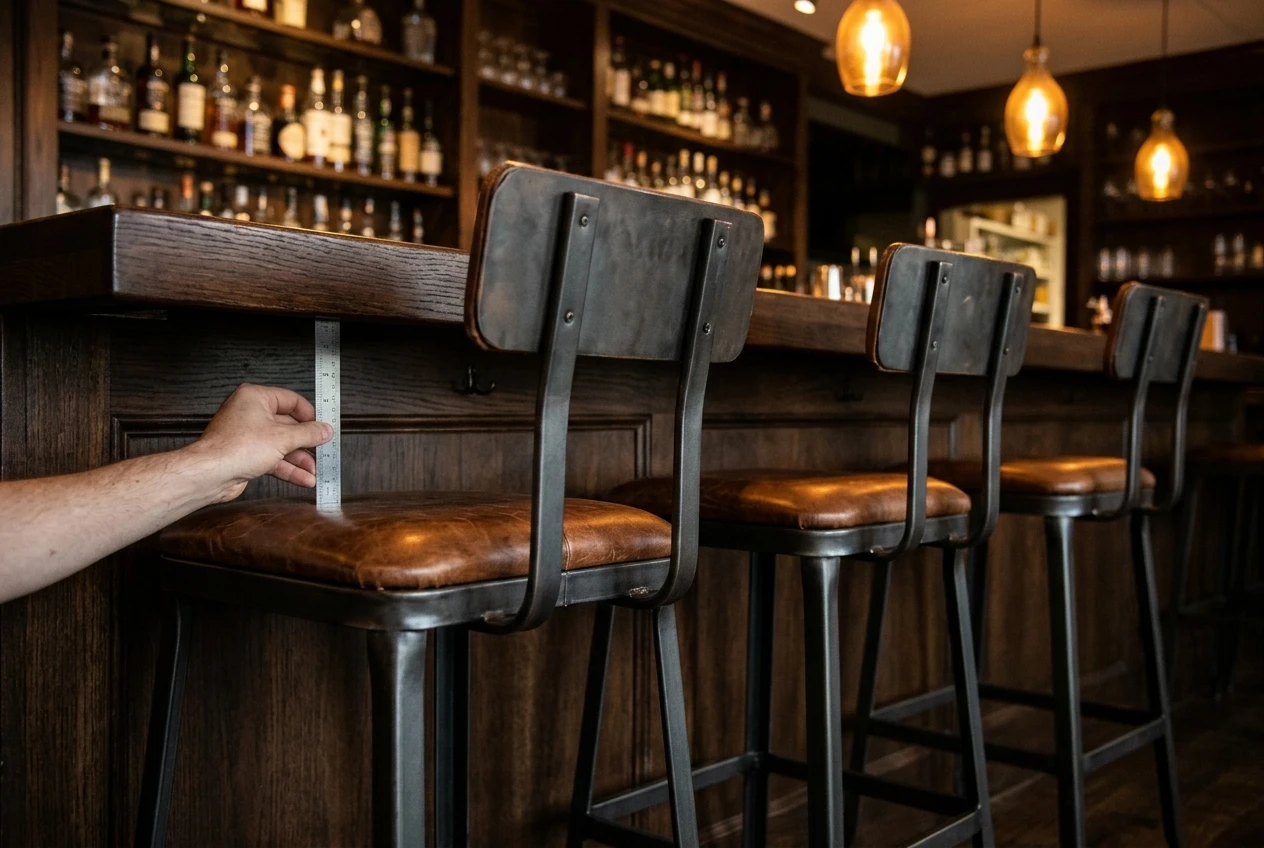
- Back or no back: backless stools tuck under the bar and save space. Stools with backs are better for sitting through a whole evening, so choose them if people will stay a while.
- Swivel: useful for turning to talk to the room, though it suits a lounge bar more than a quiet one-person corner.
- Footrest: a solid footrest bar is more comfortable than it sounds, and a stool without one makes your legs dangle.
- Frame: metal or solid wood lasts longer than thin hollow legs.
- Spacing: leave around two feet between stool centers so elbows do not collide.
Think about the back bar as well. A closed cabinet or sideboard behind or beside the stools keeps bottles in reach, and the top gives you a spot for glassware and a serving area. If you are working out which bottles belong there, our guide to creating the perfect home bar covers what to include.
How do you add storage without making the room look like a garage?
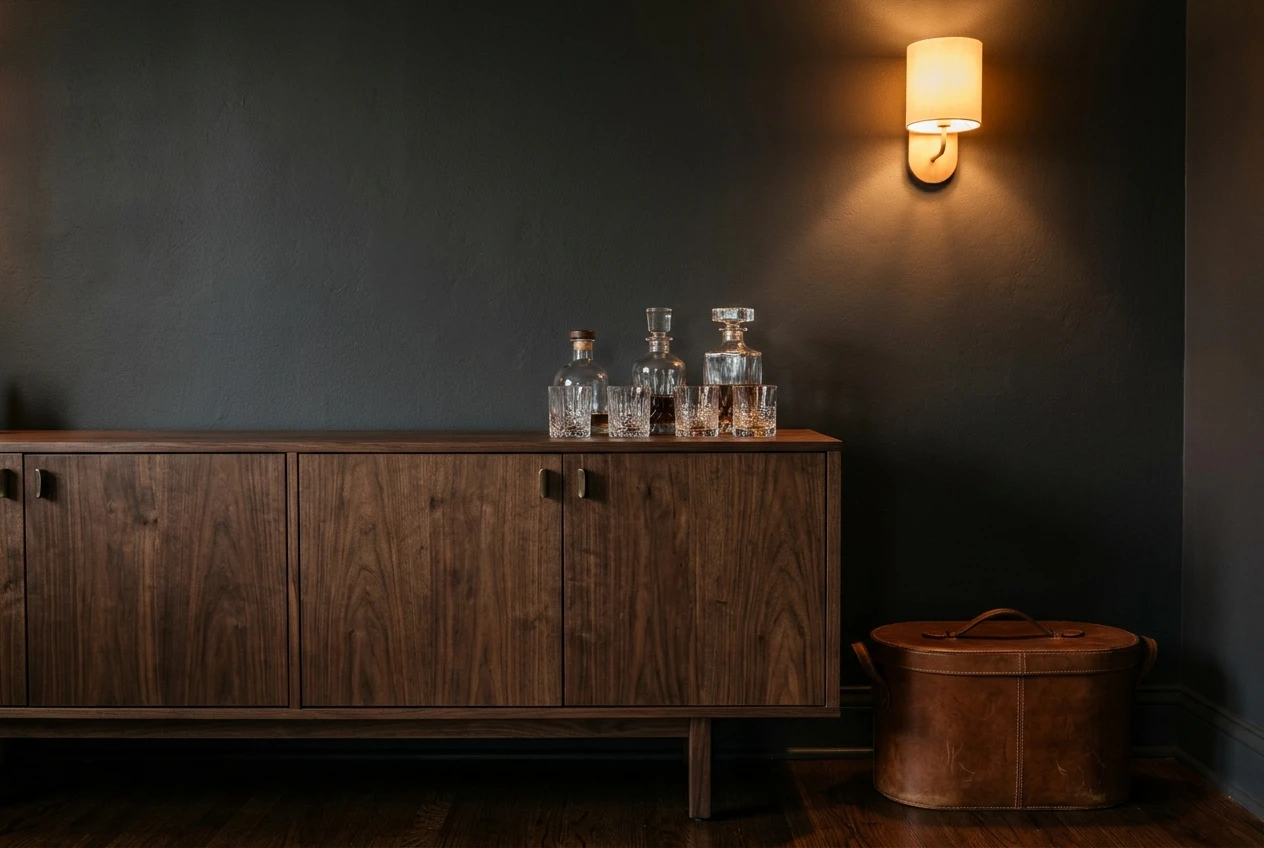
Use closed storage with a finished look, such as a sideboard, a cabinet with doors or a media console, and keep anything utilitarian out of sight. Wire racks and plastic bins are what make a man cave read as a garage.
Pick storage by what you need to put away:
- Media gear and games: a console with doors or drawers hides cables, controllers and discs. Look for ventilation if you put electronics inside.
- Bottles and glassware: a cabinet or sideboard near the bar, ideally with a lockable door if children or visitors are around. Shelves with a lip help keep bottles from sliding.
- Memorabilia and collectibles: open shelves, but only for things you want people to look at. Open shelving collects dust and clutter fast, so limit it to the items that deserve the attention.
- Odds and ends: lidded baskets or leather-look storage boxes hold blankets, remotes and cables without looking like an office supply aisle.
Wall-mounted shelves and tall narrow units are useful in a small room because they use height instead of floor space. They also keep valuable bottles off the ground and away from feet.
One practical note: a heavy loaded cabinet should be anchored to the wall if it is tall, and always check the weight rating on shelves before you stack bottles on them. A case of full liquor bottles is heavier than most people expect.
Which materials and finishes give a masculine look that lasts?
Dark wood, leather, metal and dense textured fabrics give the heavy, solid look people associate with a man cave, and they are also the materials that hold up best. The overlap is the reason these materials became the style.
Material Look Durability Watch out for Leather Classic, warm, ages visibly Wipes clean, resists spills Can scratch and fade in direct sun Solid wood Heavy, grounded Can be sanded and refinished Rings from drinks if not sealed Metal Industrial, sharp Very tough Can feel cold and show fingerprints Dense fabric Soft, textured Good if treated or removable Stains if untreated Veneer or laminate Imitates wood at a lower price Varies a lot by build Edges chip and peel over time
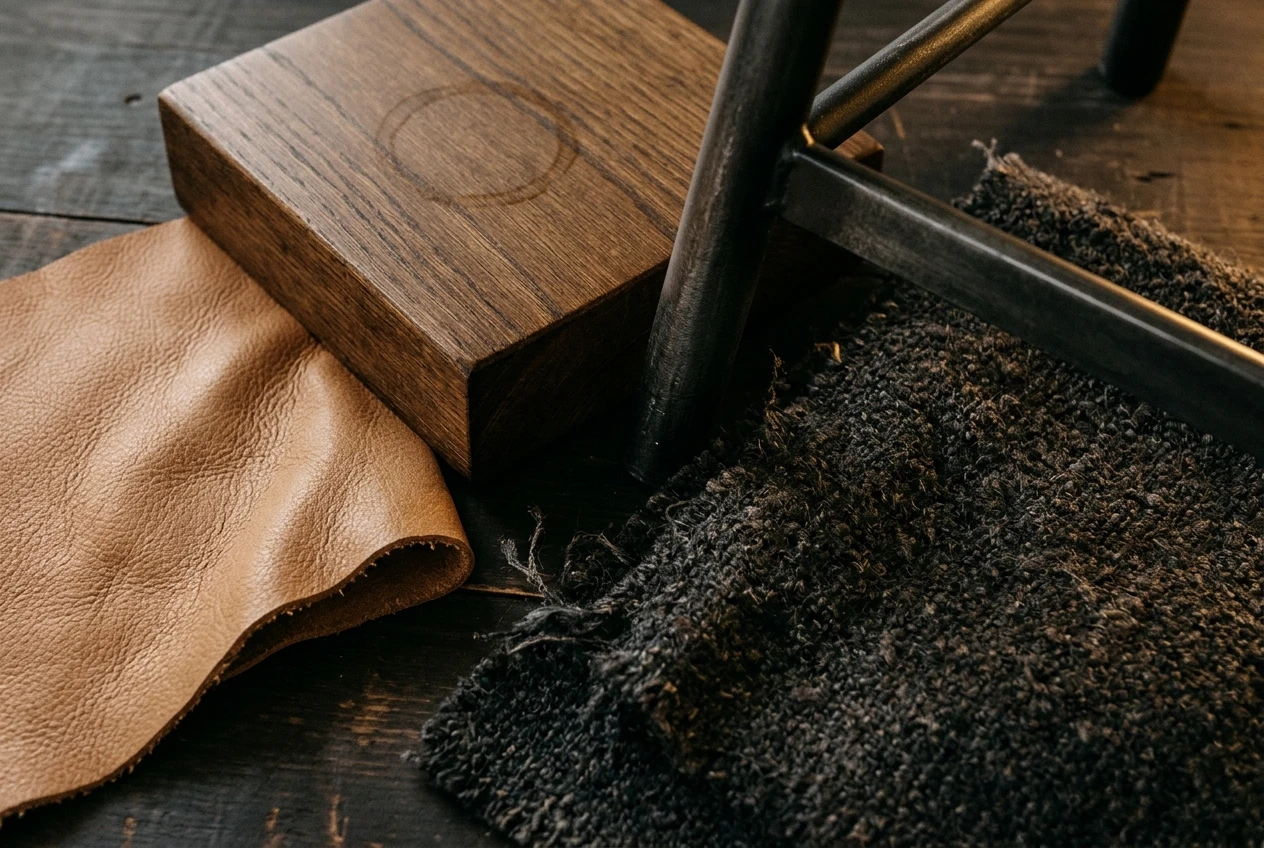
Mixing two or three materials looks more deliberate than using one everywhere. A leather sofa, a wood coffee table and metal stool frames give you contrast without clutter. A matching set from one range can look flat, like a showroom.
For colors, dark browns, charcoal, black, deep green and navy are common because they hide wear and look good in low light. Stay with a limited palette so the room reads as one space.
When you compare pieces, check construction as much as appearance. A solid frame, firm joins and a sturdy base matter more than the surface, because you can cover a tired finish but you cannot fix a frame that wobbles.
How do you plan the layout before you spend a cent?
Measure the room, mark the furniture footprints on the floor with painter’s tape, and check that you can walk around everything before you order anything. This costs nothing and prevents the most common returns.
A simple process:
- Measure the walls, doors, windows, power outlets and any fixed items.
- Mark the footprint of each piece on the floor with tape, including the space a recliner needs when fully reclined.
- Check walkways: aim for about 30 inches of clear path between furniture where people will walk.
- Set sight lines: every main seat should see the screen without craning.
- Place the bar where it does not block the path to the seating or the door.
- Check the delivery path: confirm that a sofa or sectional fits through the door and around any tight corners on the way in.
If you want themes, color schemes and whole-room concepts to build the plan around, our man cave ideas guide covers that side. This guide handles the buying decisions, and the ideas post helps you decide what the finished room should feel like.
Once the layout works on the floor, add the finishing pieces last: a rug to anchor the seating, lighting that is warm and adjustable rather than one bright overhead, and a mini fridge if there is room. Those are the pieces that make the space feel finished, and they are the easiest to swap if your taste changes.