Essential glassware for a home bar means a short list: a rocks glass, a tulip-shaped sipping glass, a highball, and a coupe. A copper mug is a worthwhile fifth if you pour Moscow mules. Those pieces cover nearly every neat pour and classic cocktail, and everything else can wait until you actually need it.
What glassware does a home bar actually need?
A home bar needs four glass shapes to start, and a fifth if mules are on your menu. Each shape solves a specific problem, such as holding ice, concentrating aroma, keeping a drink fizzy, or serving a cocktail with no ice at all.
Here is the core set and what each glass handles:
- Rocks glass (also called an old fashioned glass): whiskey over ice, an Old Fashioned, a Negroni, and most short drinks.
- Tulip-shaped sipping glass: neat whiskey, aged rum, brandy, and good tequila.
- Highball glass: anything tall and fizzy, including a gin and tonic, a rum and cola, or a vodka soda.
- Coupe: cocktails served “up” (chilled, no ice), such as a Daiquiri, a Manhattan, or a Martini.
- Copper mug (optional): the Moscow mule and its relatives.
The reasoning behind a short list is practical. Every extra glass shape needs cabinet space, a place in the dishwasher, and a reason to exist. A man cave bar usually has a shelf or two, and a shelf full of rarely used glasses leaves no room for the bottles. If you are still planning the wider setup, the guide to creating the perfect home bar covers layout and stocking, and this article sticks to the glass.
Which glass is best for neat whiskey and sipping spirits?
A tulip-shaped glass with a narrower rim than its bowl is the best choice for neat whiskey and other sipping spirits. The curve gathers the aroma and funnels it toward your nose, which matters because much of what you perceive as flavor is smell.
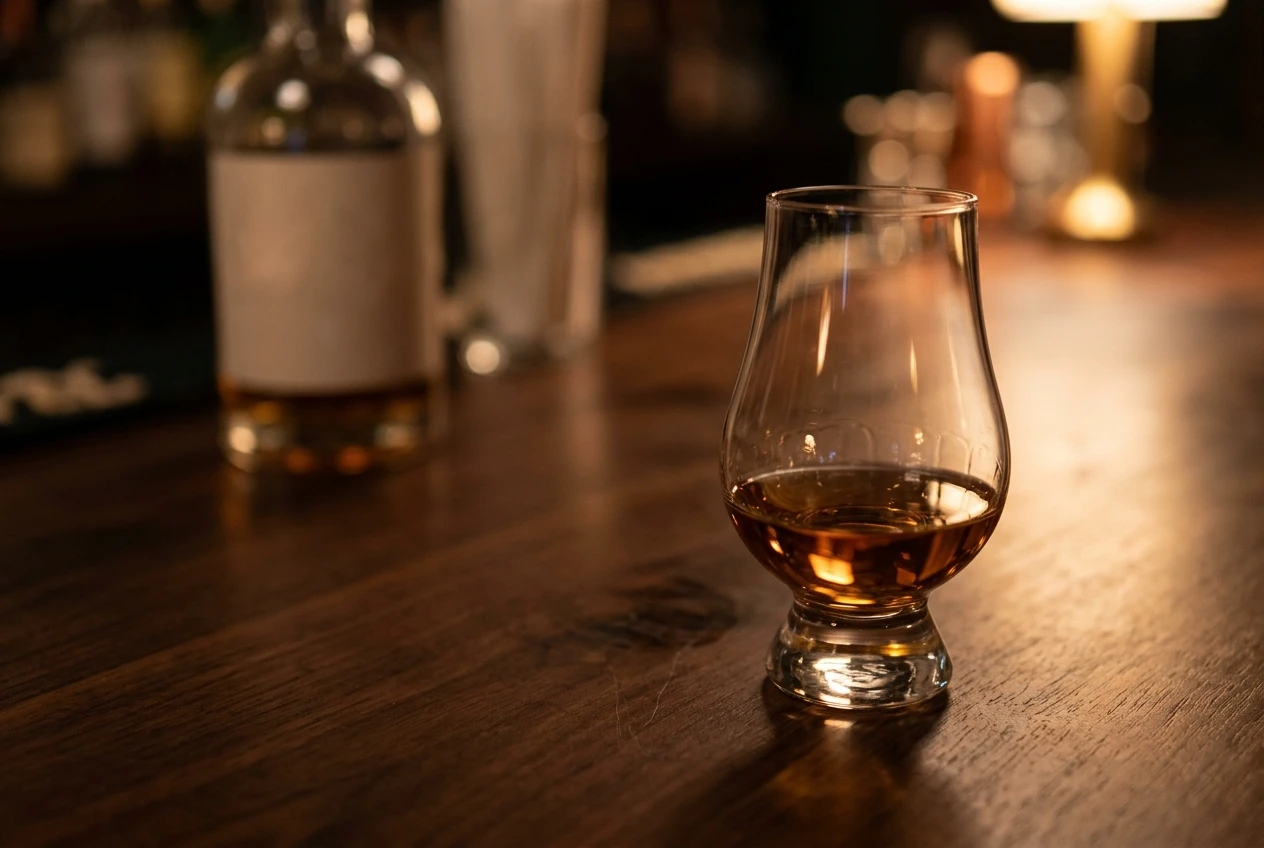
The Glencairn is the best-known example, and many distillery tasting rooms use it or something close. Any small stemless tulip works on the same principle. If you are new to whiskey and want to know what you are smelling for, the What Is Whiskey guide explains the main styles and flavors.
The same glass also suits other spirits you sip rather than mix:
- Aged rum: the vanilla, caramel, and spice notes show up better in a tulip than in a wide tumbler.
- Brandy and cognac: a tulip does the job of the traditional snifter without a separate purchase.
- Reposado and añejo tequila: a narrow rim keeps the alcohol vapor from overpowering the agave.
A rocks glass can hold a neat pour, but the wide opening lets the aroma drift off. Think of the tulip as the glass you reach for when the bottle is good enough that you want to pay attention to it.
What is the right glass for a cocktail on the rocks?
The right glass for a cocktail on the rocks is a rocks glass with a heavy base and a wide mouth. The width fits a large ice cube or sphere, and large ice melts slowly, so your drink stays cold without turning to water.
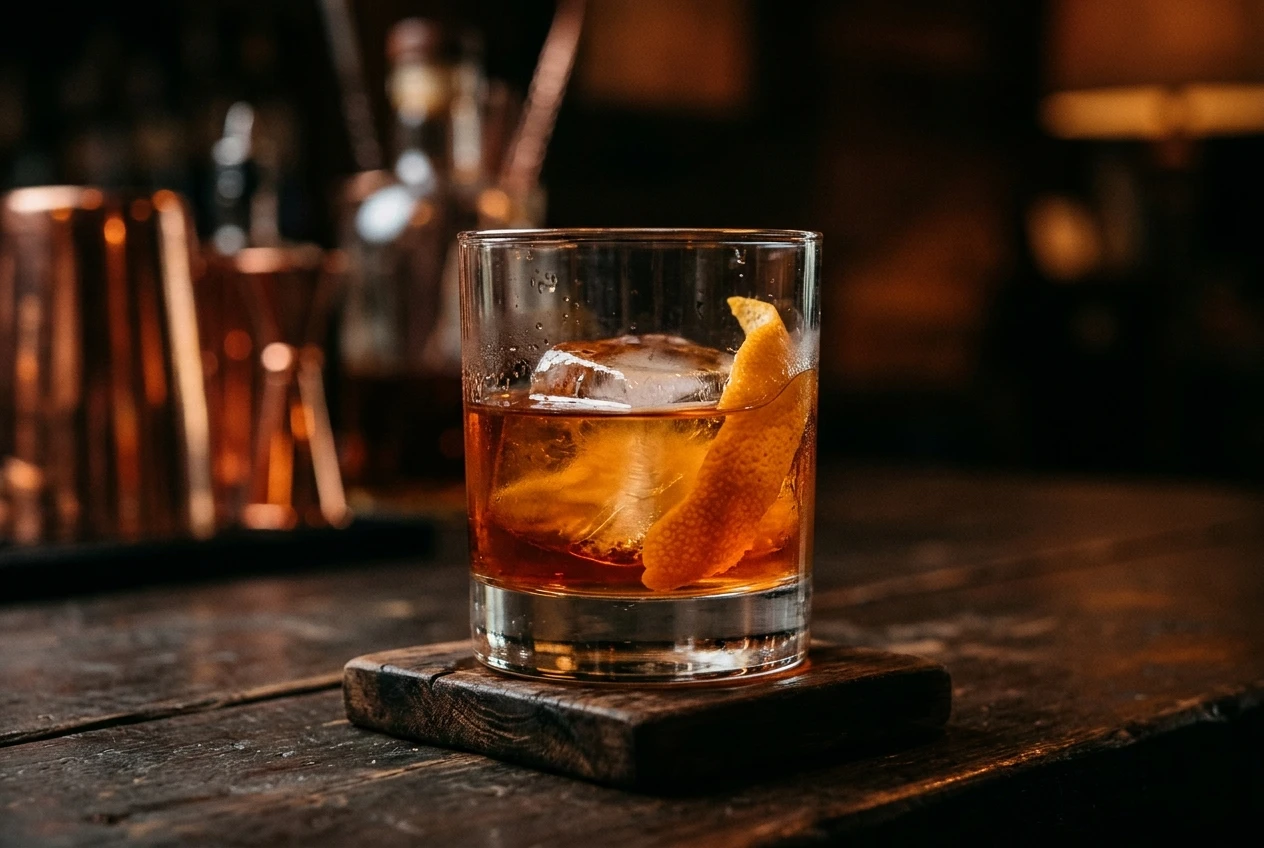
Look for a glass that holds roughly 8 to 12 ounces. That is enough for a spirit-forward cocktail plus ice, and it also works for a straight pour over a single cube. Smaller glasses crowd the ice and spill; much larger ones make a measured pour look lonely.
If you chill whiskey without diluting it, you might also use reusable stones in the glass. The benefits of whiskey stones article covers how they work and what they can and cannot do. Either way, the glass shape is the same.
The rocks glass is the workhorse of the set. It handles the Old Fashioned, the Negroni, the Boulevardier, a whiskey and ginger, and a simple Scotch and soda in a pinch. If you only buy one type first, buy this one.
Do you need highball, coupe and martini glasses?
You need a highball and a coupe, but you can skip the martini glass. The highball and the coupe each do a job no other glass in the set can, while a coupe handles everything a martini glass does and spills less.
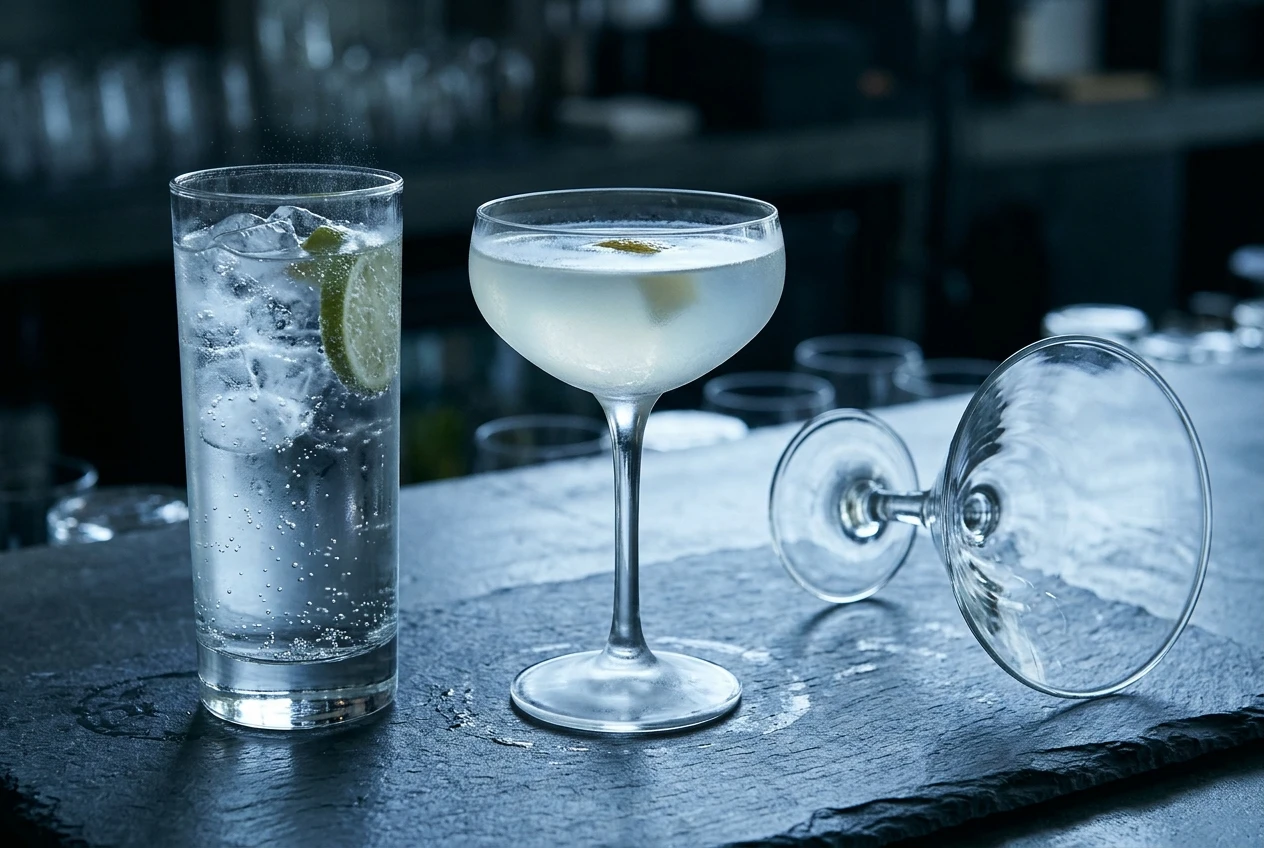
Highball: Tall drinks need a tall glass so the ice, spirit, and mixer stay in proportion and the bubbles last. A straight-sided glass of 10 to 14 ounces covers the gin and tonic, the Paloma, the Cuba Libre, and the vodka soda. A Collins glass is a taller, slimmer cousin, but one highball shape is plenty for a home bar. The guide to gin is a good companion if tonic water is going to be your main mixer.
Coupe: A coupe is a stemmed glass with a shallow, rounded bowl. You hold it by the stem so your hand does not warm a drink that has no ice in it. It suits anything shaken or stirred and strained, from a Daiquiri to a Manhattan to a Martini.
Martini glass: The classic V-shaped glass looks sharp on a shelf, but the wide, flat angle makes it easy to slop a full pour on the walk to the couch. The coupe holds the same drink with fewer accidents. If you love the look, buy martini glasses later as a style choice, not a need.
Which specialty glasses are worth buying (and which are just shelf decoration)?
Specialty glasses are worth buying only if you make that specific drink often enough to use the glass weekly. For most beginners that means the copper mug, and possibly one more, while the rest are shelf decoration.
Worth considering:
- Copper mug: If the Moscow mule or a Kentucky mule is a regular, the mug keeps the drink very cold and suits the drink’s identity. The Moscow mule mug article looks at the claims made about copper, so you can decide how much they matter to you.
- Nick and Nora glass: A small, deep-bowled stemmed glass that works like a coupe but is harder to spill. Pick it over the coupe if you prefer it, not in addition to it.
- Wine glass: If you also drink wine, one all-purpose stemmed glass can double as a spritz or sangria glass.
Mostly decoration:
- Brandy snifter: The tulip does the same work. If you pour a lot of cognac and enjoy the ritual, buy snifters then.
- Hurricane, tiki, and novelty glasses: Fun for a themed night, but they live in a cupboard the other 51 weeks of the year.
- Margarita glasses with the wide saucer rim: A rocks glass or a coupe makes a better margarita with less mess.
- Cordial and shot glass sets: A small shot glass or jigger is useful for measuring, and the beginner’s guide to cocktail making tools covers that. A set of twelve engraved shot glasses mainly collects dust.
- Matched decanter sets: A decanter is lovely, but it adds no flavor and your bottle already pours fine.
If you are tempted by a novelty glass, ask one question: what will I pour in this on a regular Tuesday? If you do not have an answer, skip it.
What should you look for in material, weight and washing-up durability?
Look for sturdy glass with a thick base, a rim that is not paper-thin, and a label that says dishwasher safe. A man cave bar gets used and cleaned in a hurry, so the glass has to survive both.
Feature What to look for Why it matters Base Thick, heavy base on rocks glasses Resists tipping and chipping, and feels solid in the hand Rim Even and smooth, not overly thin Thin rims chip and crack more easily in the dishwasher Material Lead-free glass or lead-free crystal Clear, durable, and safe for everyday use Stem (coupe) Thicker stem with a sturdy join to the bowl The stem is where stemmed glasses usually snap Washing Dishwasher-safe label You will not want to hand-wash every glass after game night
Some notes on those choices:
- Glass versus crystal: Standard glass is cheaper and tougher. Lead-free crystal is clearer and often lighter and thinner, which some people prefer for sipping, though it needs more care.
- Leaded crystal: Traditional leaded crystal is fine for serving a drink for a short time, but it is not made for long-term storage of spirits. Lead-free options are easy to find, so there is little reason to choose it.
- Weight: A heavy rocks glass feels good and resists spills. A very light tulip glass feels delicate, so handle it with care.
- Stackability: Straight-sided highballs stack neatly, which saves shelf space.
- Clear glass: Plain, clear glass lets you see the color of the drink. Heavy cuts and patterns hide it.
Buy at least four of each type you use, so a small group can drink at once without a mid-evening washing session.
How do you build a glassware set in stages without overspending?
Build the set in stages, starting with the glass for the drink you pour most, and add the next type only when you find yourself wishing for it. The aim is to own about five types you use, rather than twelve you admire.
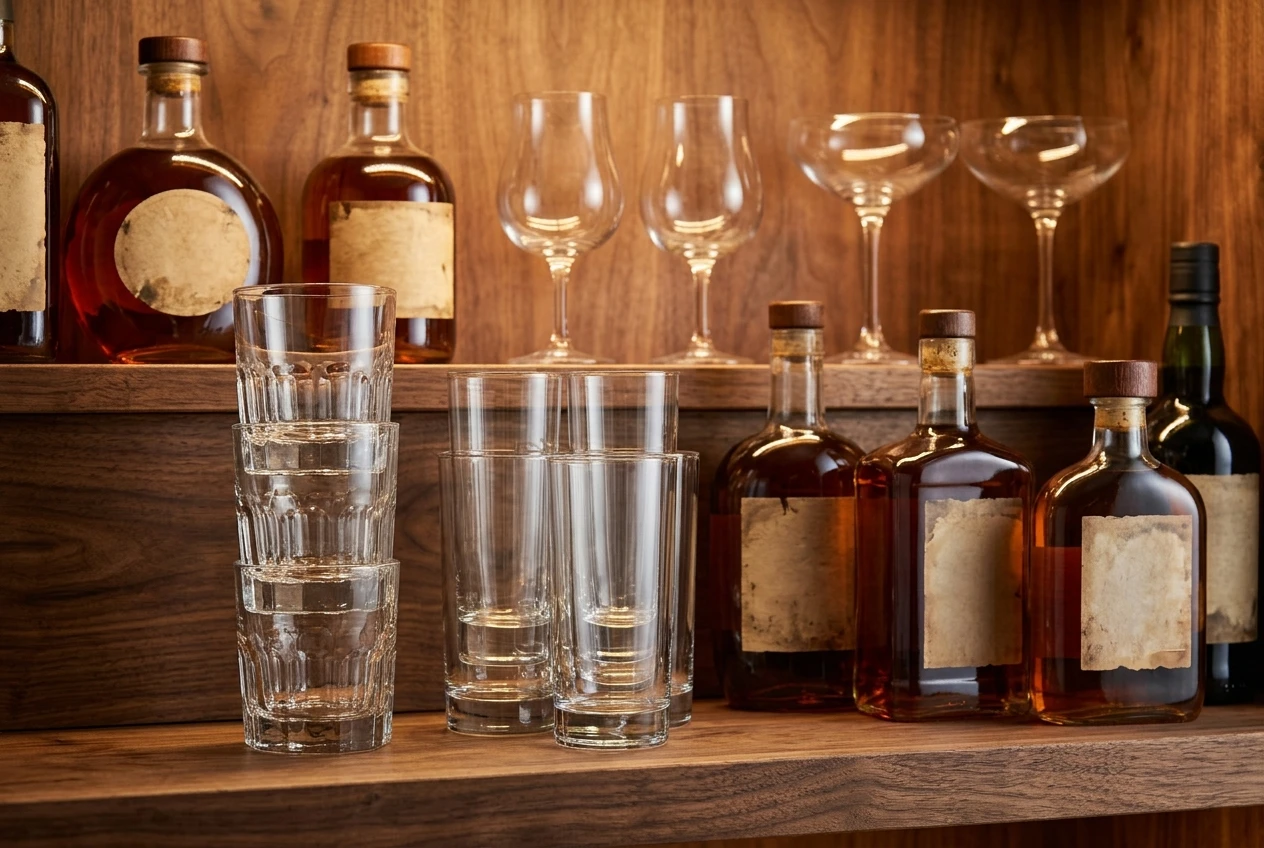
- Start with the rocks glass. Buy four. It handles whiskey on the rocks, Old Fashioneds, Negronis, and nearly any short drink, so it earns its place immediately.
- Add a highball. Buy four if mixed drinks such as a gin and tonic or a rum and cola are on your menu. It is the second most versatile shape.
- Add a tulip sipping glass. Buy two. Add this once you own a bottle worth sipping neat, and use it for whiskey, aged rum, brandy, or reposado tequila.
- Add a coupe. Buy two to four once you start making shaken or stirred cocktails served without ice.
- Add specialty glasses last. A copper mug set or a Nick and Nora glass comes after the core four, and only if you keep making that drink.
Match the quantities to your habits. If you usually drink with one or two friends, two of the sipping and coupe glasses are enough. If you host a larger crowd, buy more rocks glasses and highballs, since those get the most use.
Let your shelf of bottles lead the glassware. Buy the glass after the bottle shows up, not before. For the cocktail tools that go alongside these glasses, the beginner’s guide to cocktail making tools is a useful companion.
Ready to pick your glasses?
If you want to browse glassware and bar picks that match this list, head to the Glassware Cheat Sheet page. Some of the links there are affiliate links, which means the site may earn a commission if you buy, at no extra cost to you.